AI Search Visibility for HVAC and Plumbing Companies
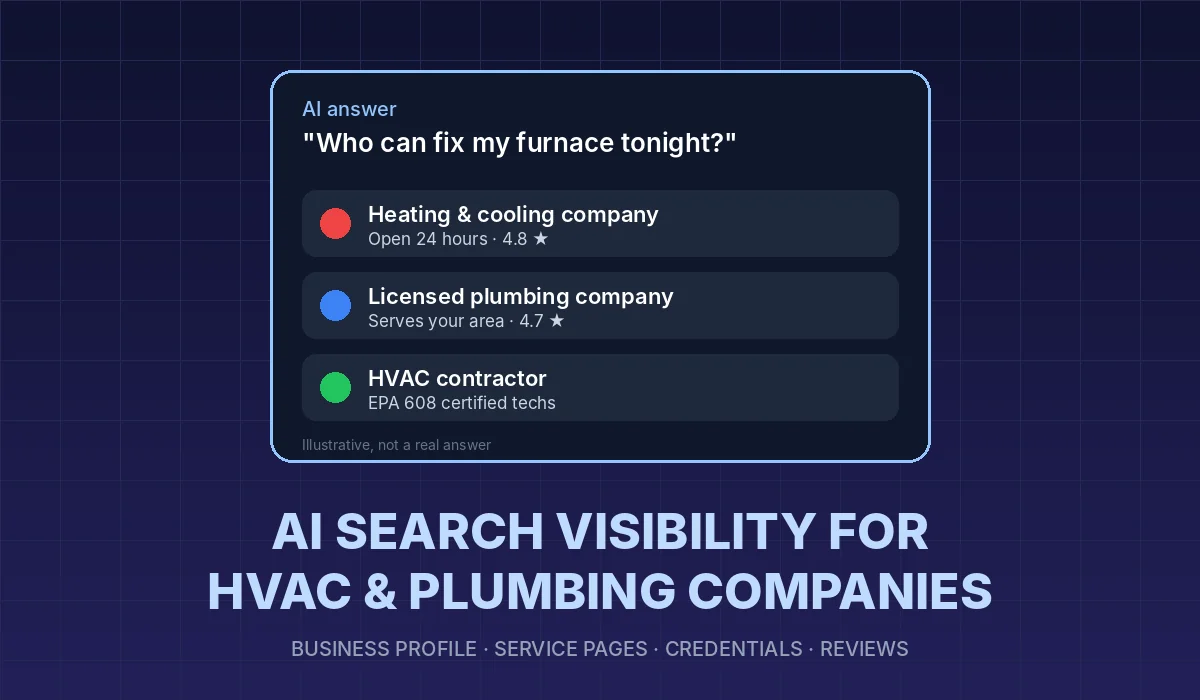
A homeowner's furnace quits on a cold night. Instead of scrolling through ads, she opens ChatGPT and types "who can fix a furnace tonight near me." Two weeks later her neighbor asks Google's AI Mode whether a tankless water heater is worth it and which local plumbers install them. Both answers name a few companies. If yours isn't one of them, you never get the call, and you never find out the conversation happened.
This is no longer a fringe habit. BrightLocal's Local Consumer Review Survey 2026, a panel of 1,002 US adults, found that 45% of consumers used ChatGPT or other generative AI tools for local recommendations, up from 6% the year before. Its follow-up on AI trust puts ChatGPT at 31% of consumers and Google's AI Mode at 23%, and says 63% of people who use these tools trust the recommendations.
The good news for HVAC and plumbing owners: there is no secret switch. The AI answers lean on the same evidence that wins local search. The trades just have a few habits that tend to break that evidence. This guide covers what to fix, in order.
Two kinds of questions, two kinds of proof
Heating, cooling and plumbing work splits into two buying moments, and AI tools treat them differently because the questions are different.
Emergency jobs ("no hot water," "AC not cooling," "burst pipe," "furnace won't start") are about speed and distance. The person wants someone close, open now and trustworthy enough to let into the house. Google treats these as urgent trades: its Local Services screening page for the US lists HVAC and plumbing among the urgent categories and applies an extra level of screening that includes background checks on service professionals.
Planned jobs ("heat pump vs. furnace," "best tankless water heater installer," "maintenance plan worth it") are researched over days. Here the AI has time to read pages, compare companies and quote reviews. Depth beats proximity.
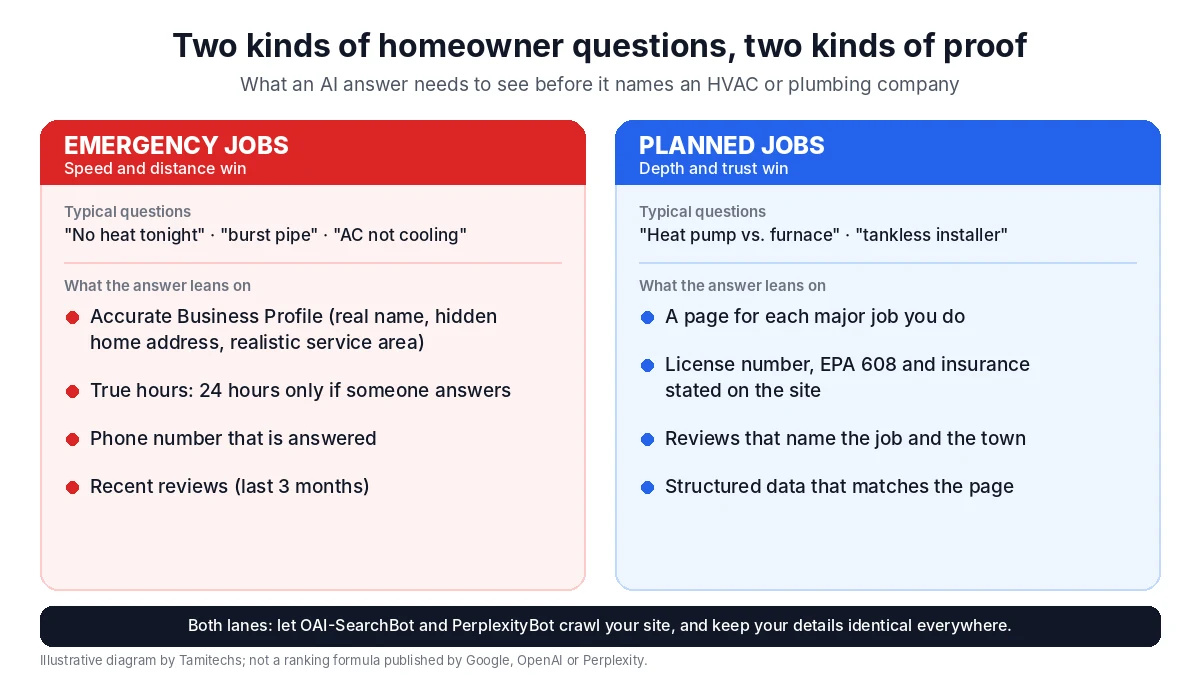
Illustrative diagram by Tamitechs. It summarizes the guidance in this article; it is not a ranking formula published by Google, OpenAI or Perplexity.
Most companies are strong in one lane and invisible in the other. A shop with a great Google Business Profile but a five-page website often shows up for "emergency plumber near me" and disappears when someone asks which local company is best for a water heater replacement. The fixes below cover both lanes.
Where AI answers about local trades come from
It helps to know what you are actually optimizing for, because a lot of "AI SEO" advice gets this wrong.
- Google AI Overviews and AI Mode use the normal Google index. Google's page on AI features and your website says "there are no additional requirements to appear in AI Overviews or AI Mode, nor other special optimizations necessary." A page only needs to be indexed and eligible to show with a snippet.
- Your Business Profile matters for AI, too. Google's newer guide, Optimizing your website for generative AI features on Google Search (updated July 2026), says Business Profiles can help your products and services be visible in AI responses, not just in Maps.
- ChatGPT search has to be allowed in. OpenAI's help article on searching the web with ChatGPT says sites must allow the OAI-SearchBot crawler to be eligible, and that ChatGPT may use an approximate location from the user's IP address to return local results.
- Perplexity says its PerplexityBot crawler is what surfaces and links websites in its results, and recommends allowing it in robots.txt.
None of these companies sells placement. Google's local ranking help page says "there's no way to request or pay for a better local ranking on Google," and OpenAI says plainly that "placement is not guaranteed." Anyone promising you the top spot in ChatGPT is promising something nobody can deliver. For a step-by-step check of why a specific competitor gets named instead of you, see our diagnostic for local service businesses.
Fix 1: Build your Business Profile like a service-area trade
For emergency questions, your Google Business Profile is the most important page you own. Google's guidelines for representing your business have several rules that HVAC and plumbing companies trip over:
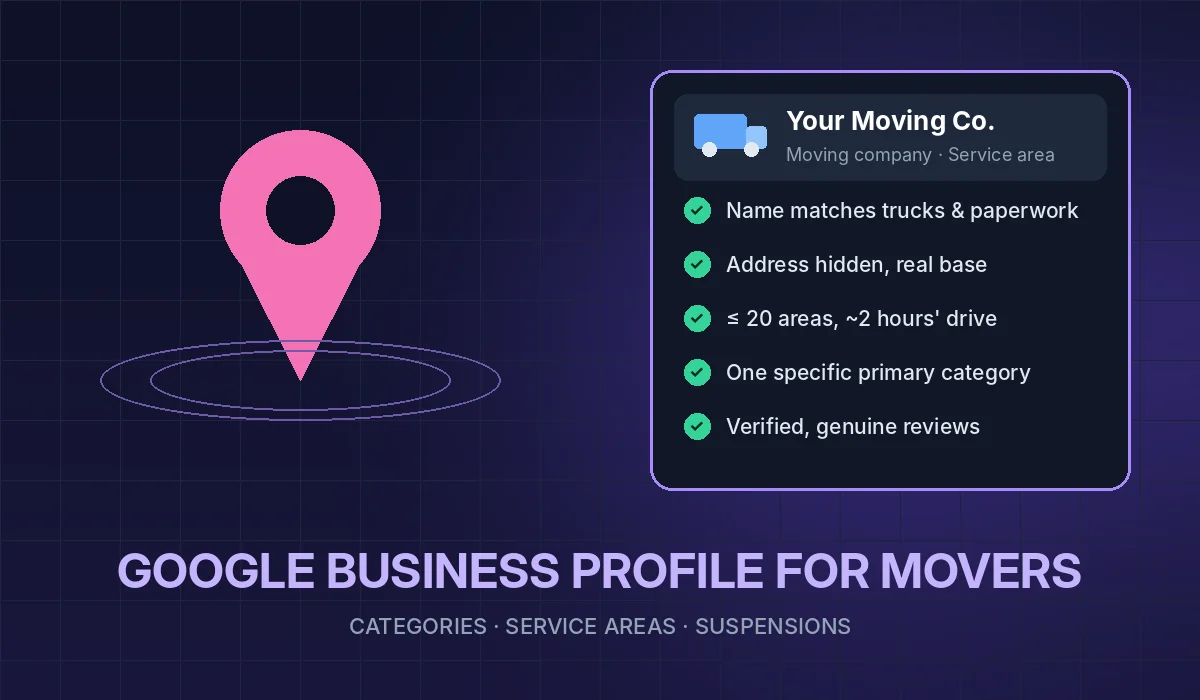
- Hide your address if customers don't come to you. Google says service-area businesses "should hide your business address from customers," and gives the example of a plumber working from home.
- Keep the service area realistic. Google says the overall area "shouldn't extend farther than about 2 hours of driving time from where your business is based." Drawing a circle around three states doesn't help anyone.
- No virtual offices. A service-area business "can't list a 'virtual' office unless that office is staffed during business hours." A rented mailbox in a better ZIP code risks the whole profile.
- Use your real name. Google says "including unnecessary information in your business name isn't permitted." "Smith Plumbing" is fine; "Smith Plumbing 24/7 Emergency Drain Cleaning Dallas" is not.
- One profile per business location. Google allows one service-area profile for a business that travels to customers, and separate profiles only for separate locations with their own staff.
Categories tell Google, and the AI systems that read Google's data, what you are. Google's category help page says to "select a primary category that best describes your business," to pick a specific one from the list, and "do not select a category for every product or service." A combined shop should choose the primary category that matches most of its revenue and add the other trade as a secondary category, not ten variations of both.
Hours decide whether you show up for "open now" questions. Google's business hours help page lets you set 24-hour days, and its local ranking page says to keep hours current, including special hours. Only choose 24 hours if a person actually answers the phone at 3 a.m. An AI answer that sends a homeowner to your voicemail at midnight produces a one-star review, which is worse than not being listed.
Fix 2: Give every major job its own page
For planned jobs, the AI needs something to read. A single "Services" page that lists furnace repair, AC installation, water heaters, drain cleaning and repiping in one paragraph gives it almost nothing to quote.
Build one page for each job that brings in real revenue: furnace repair, heat pump installation, AC repair, water heater replacement, tankless installation, drain cleaning, sewer line repair, and so on. On each page, answer what a homeowner would ask before calling:
- Which equipment brands you install and service
- What the visit includes and how scheduling works
- Which towns or counties you cover for that service
- Whether you offer maintenance plans or warranties, and what they cover
- Who does the work (licensed, certified, background-checked employees or subcontractors)
Write it yourself, from what your techs actually see in the field. Google's AI optimization guide tells site owners to "create the content yourself based on what you know about the topic" and warns against simply recycling "what others on the internet have already said."
Be careful with city pages. Google's same guide says publishing large numbers of pages mainly to game rankings or AI responses violates its scaled content abuse policy. A page for each town you really serve, with something specific to say about it, is fine. Two hundred near-identical "Plumber in [City]" pages are a liability. If your site needs those pages built, our website development team can help.
Fix 3: Make your credentials easy to check
Trust carries extra weight when the customer is letting a stranger into the house, and the evidence is public record you already have.
- State license. Put your contractor license number on your website footer, on each service page and in your Business Profile description. Google's Local Services program checks business and owner licenses at the state level "where applicable by local law," along with general liability insurance, per its screening requirements. Even if you never buy those ads, it shows which facts Google treats as proof that a trade business is legitimate.
- EPA Section 608 certification (HVAC). The EPA's technician certification page says technicians who maintain, service, repair or dispose of equipment that could release refrigerants must pass an EPA-approved test. Saying your techs hold Universal or Type II certification is a concrete, checkable claim, unlike "highly trained."
- Insurance and background checks. If your techs are background-checked and you carry liability insurance, say so on the site in plain words.
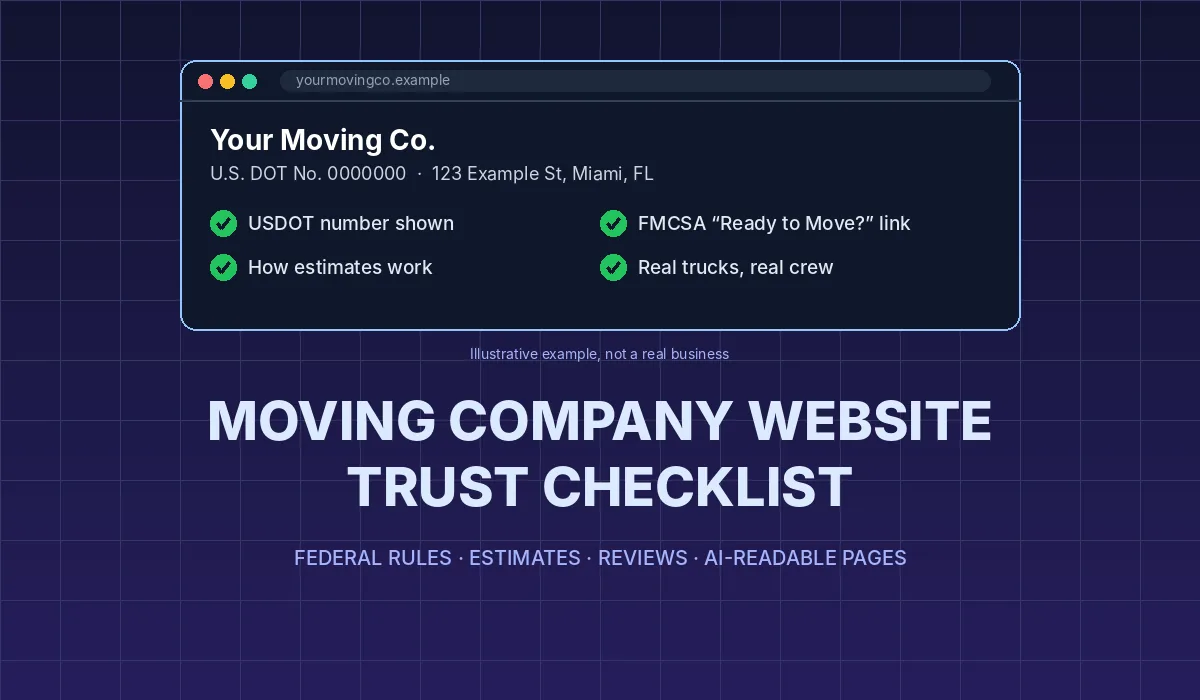
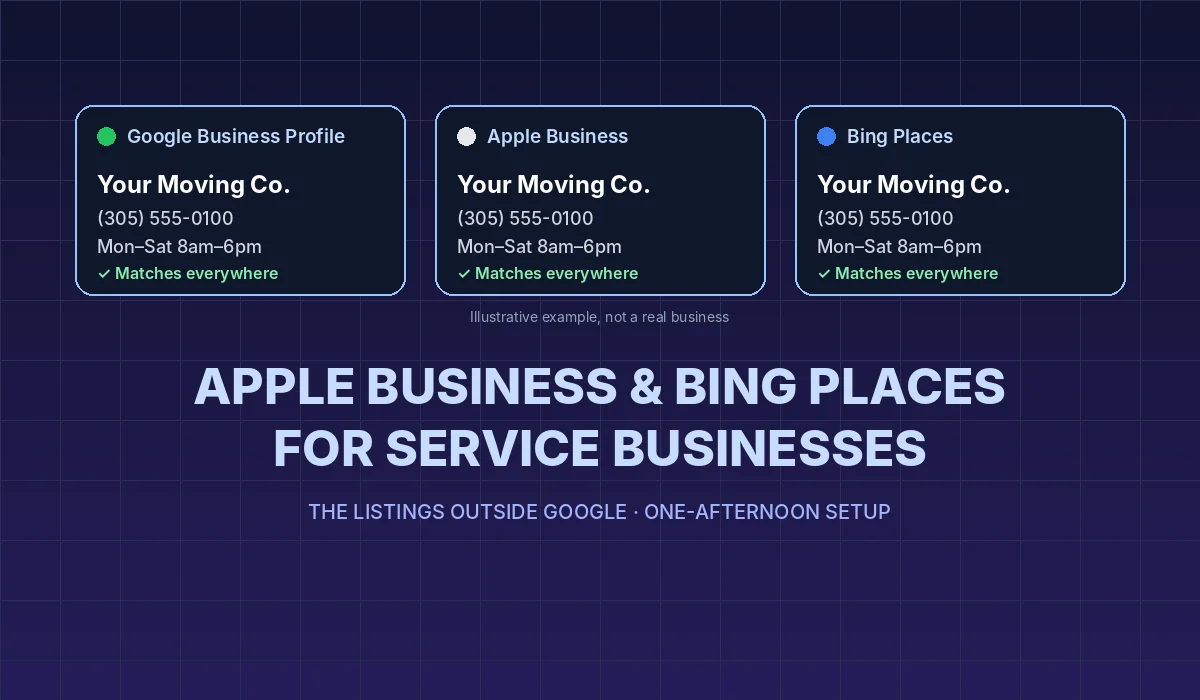
Keep these details identical everywhere: website, Business Profile, BBB, Angi, Yelp, Nextdoor and your Facebook page. When sources disagree about your name, phone or license, an AI system has less reason to trust any of them.
Fix 4: Earn reviews that name the job and the town
Reviews feed both lanes. Google's local ranking page says "more reviews and positive ratings can help your business's local ranking." BrightLocal's 2026 survey shows how picky consumers have become:
| Share | What consumers said (BrightLocal LCRS 2026) |
|---|---|
| 68% | Only use a business rated 4 stars or higher |
| 31% | Only use a business rated 4.5 stars or higher |
| 74% | Look for reviews written in the last three months |
| 89% | Expect owners to respond to reviews |
| 50% | Put off by generic or templated replies |
Recency matters most for trades because your work is seasonal. A heating company whose last review is from April looks asleep in December.
The useful reviews describe the job: "replaced our water heater in Plano the same day" tells an AI system more than "great service." You can't script reviews, but you can make that kind of review more likely. Ask every customer right after the job, while the tech is still on site or within a day, and mention the service by name in your request.
Stay inside the rules. The FTC's Consumer Reviews and Testimonials Rule Q&A allows generalized requests to all customers, and even incentives, as long as there is no express or implied requirement that the review be positive. Buying reviews, posting fake ones or tying a reward to a five-star rating crosses the line. In December 2025 the FTC sent warning letters to 10 companies and noted that violations can bring civil penalties of up to $53,088 each.
Reply to every review, in your own words, mentioning what happened. Our reputation management service handles review requests and replies for trade businesses that don't have time to do it between calls.
Fix 5: Add structured data that matches the page
Schema.org has specific types for your trades: HVACBusiness and Plumber, both under HomeAndConstructionBusiness. Marking up your name, phone, service area, hours and services with the right type makes your details machine-readable.
Keep expectations honest, though. Google's AI optimization guide says "structured data isn't required for generative AI search, and there's no special schema.org markup you need to add," and its AI features page says your structured data should match the visible text on the page. Use schema to confirm what the page already says, not to claim services or areas the page doesn't mention.
Fix 6: Make sure the AI crawlers can get in
This one takes ten minutes. Open your robots.txt (yourdomain.com/robots.txt) and confirm it doesn't block OAI-SearchBot or PerplexityBot. Then ask whoever runs your hosting or firewall whether bot protection is blocking them. OpenAI notes that the host or content delivery network must also allow its published crawler IP addresses. A site that blocks these crawlers can't be cited by those tools, no matter how good it is.
What you can skip
A lot of AI visibility advice costs money and does nothing. Based on Google's own guidance:
- Special AI files for Google. Google says "you don't need to create new machine readable files, AI text files, markup, or Markdown to appear in Google Search," and that it doesn't use them. Other tools may read them, but they won't move your Google visibility.
- Chopping pages into tiny chunks. Google says there is "no requirement to break your content into tiny pieces for AI to better understand it."
- Planting mentions. Google says chasing inauthentic mentions "isn't as helpful as it might seem."
- Rewriting pages in "AI language." Google says its systems understand synonyms and general meaning. Write for homeowners.
A 30-day starting plan
| Week | Emergency lane | Planned lane |
|---|---|---|
| 1 | Fix Business Profile name, address visibility, service area, categories and hours | Check robots.txt and firewall for OAI-SearchBot and PerplexityBot |
| 2 | Add license number and insurance details to profile and site footer | Publish pages for your two highest-revenue jobs |
| 3 | Start asking every customer for a review after each job | Add certifications and brands serviced to those pages |
| 4 | Reply to every review from the past 90 days | Add HVACBusiness or Plumber structured data that matches each page |
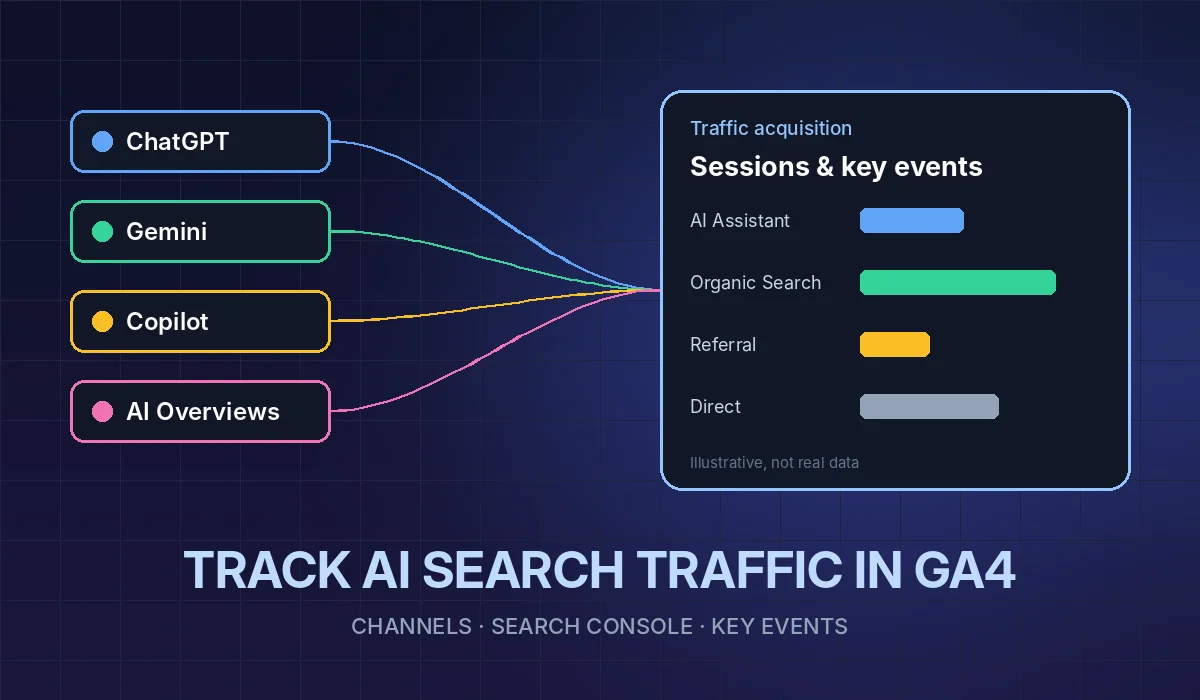
Then test. Ask ChatGPT, Google AI Mode and Perplexity the questions your customers ask, from a phone in your service area, and write down who gets named each week. Answers vary, so look for a trend over a month rather than reacting to one result. To see whether AI traffic turns into calls and booked jobs, set up tracking with our guide to tracking AI search traffic and leads in GA4.
Find out where your company stands
The two gaps to check first are hours that promise more than the phone delivers and a website with nothing for the AI to quote about your biggest jobs. If you'd like a clear read on how your company shows up in AI answers and local search, our SEO team can run the checks above with you. Contact us for a review of your business.
Sources
- BrightLocal: Local Consumer Review Survey 2026
- BrightLocal: Nearly half of consumers are asking AI for business recommendations
- Google Search Central: AI features and your website
- Google Search Central: Optimizing your website for generative AI features on Google Search
- Google Business Profile Help: Guidelines for representing your business on Google
- Google Business Profile Help: Tips to improve your local ranking
- Google Business Profile Help: Manage your business category
- Google Business Profile Help: Edit your business hours
- Local Services Help: Business screening and verification requirements (US)
- OpenAI Help Center: Searching the web with ChatGPT
- Perplexity: Perplexity crawlers
- US EPA: Section 608 technician certification requirements
- FTC: Consumer Reviews and Testimonials Rule, questions and answers
- FTC: FTC warns 10 companies about possible violations of the Consumer Review Rule
- Schema.org: HVACBusiness and HomeAndConstructionBusiness
Written by Ava Davis for Tamitechs.